Shaw + Smith’s Single Vineyard wines have had a glow up. When the 2024 Lenswood Chardonnay, 2024 Lenswood Pinot Noir and 2023 Balhannah Shiraz hit shelves in March, they bore shiny new labels with the name of each vineyard proudly and prominently displayed.
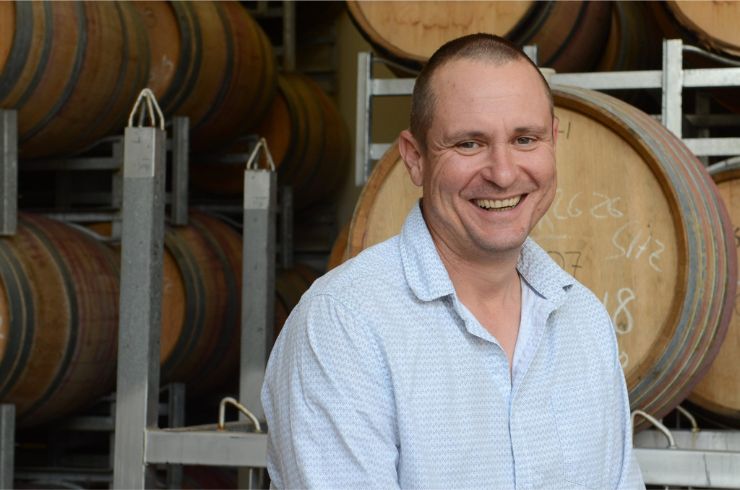
“Connection to place is what resonates most with us,” says chief winemaker and CEO Adam Wadewitz. “We’ve been leaning more into site and wanted to reflect that.”
Adam has been making these wines for over 10 years now, with the first Balhannah Shiraz produced in 2013, Lenswood Chardonnay in ’14, and Lenswood Pinot Noir in ’16. The journey has been intentionally slow, he says. “You can’t underestimate the time it takes to understand vineyards, how to unlock the full potential of what's going on and make the most of each season.”

“One of the things that makes single vineyard wines so fascinating is that they come with the personality of the site,” he adds. “It’s less about dialling something up and trying to force a nice drink, more about standing back and loving the site for what it is.”
Balhannah was first planted by Shaw + Smith founders Martin Shaw and Michael Hill-Smith MW alongside the tasting room in 1999; a decade after the brand was established. The 35ha site sits on the middle of a hill at an elevation of 340–380m, on vibrantly coloured soils courtesy of red clay and ironstone, and is the largest, lowest and warmest of their four Adelaide Hills vineyards.
It's also "one of the most characterful, recognisable sites we’ve worked with,” says Adam. “The wines are medium-bodied and very red-fruited with dried spice characters and plenty of tannin from the ironstone. The tannin comes like a freight train!”

At 455–500m elevation, the 20ha Lenswood vineyard, purchased by Shaw + Smith in 2012 but planted in ’99, is considerably cooler, leading to wines with great natural acidity and intensity of flavour.
“The hallmarks of Lenswood chardonnay are white floral notes, and extract from low yields. You get this extra level of intensity on the palate. The wines often take longer to show themselves, too.
“Pinot noir off that same site is very much on the ethereal spectrum,” he continues. “Perfumed, lots of aromatics, forest floor, and a delicateness that runs through.”
The other two vineyards, both at 500m, include a high-density (10,000 vines per/ha) site in Piccadilly Valley, planted in 2020 to chardonnay and pinot noir, and a site in Lobethal, acquired in '24 and planted to 10ha of chardonnay. All four sites are certified organic, and tended to by group viticulturist Murray Leake and vineyard manager Ben Jonas, who’ve worked hard to improve and maintain soil health, encourage biodiversity, and increase vine density.

Shaw + Smith are yet to release a single-vineyard wine from either Piccadilly Valley or Lobethal, despite seeing “glimpses of some mind-blowing wines”.
“We want to wait for when the vineyards are ready, when we're ready and for when we see the expression that we're after. A lot of work's gone into that. We don't want to rush these things,” says Adam.
“None of this stuff is short-term. One of the things about family-owned wineries and vineyards is that you get a chance to lean into that and think about the future.”
Subscribe to the Halliday Wine Companion Podcast
Hear from some of Australia's top winemakers and industry professionals – including Michael Hill-Smith MW – as they share their stories and insights on the Halliday Wine Companion Podcast. Listen here, or on your usual podcast platform, and remember to rate, share and subscribe so you never miss an episode.
Latest Articles
-
Wine Lists
Looking for something new to drink? Here are eight top-rated wines to try
6 Aug 2026 -
Travel
Inside Tamar Ridge and PIRIE’s elegant new Tamar Valley cellar door
5 Aug 2026 -
Meet the winemaker
What makes Brendon Keys one of the Adelaide Hills' most individual producers
6 Aug 2026 -
Events
Halliday Wine Academy: Wine Immersion Tours
30 Jul 2026


More like this
-
Meet the Winemaker
Why Darryl Catlin decided to step down from big-name wineries and focus on his own brand
6 May 2026 -
News
With Julian Grounds at the helm, Stonier is better than ever – as the 2025 release proves
6 May 2026 -
News
Why this ex-Vasse Felix winemaker made the Ferguson Valley his future
29 Apr 2026