Have two wine geeks ever stopped to enjoy a glass of wine without the conversation ending up – in one way or another – back in the vineyard? Hardly ever, in my experience, and it’s hardly surprising given terroir is a fundamental of winemaking.
One of terroir’s fundamentals is wildlife. Yes, creatures can sometimes cause enormous damage and cost, but there are plenty of ‘good guys’ who are spectacularly efficient at working to a vineyard’s advantage, and often at ungodly hours, too. Take owls for instance, who put in the original vineyard night shift – a single barn owl can consume more than 3000 rodents a year. That’s an important number considering the havoc that gophers and voles can wreak on vines: severing roots, collapsing irrigation lines and creating soil voids that destabilise a vine’s balance. When owl boxes are strategically placed along vineyard margins, it’s effectively putting rodent-management infrastructure in place. Using owls can even dismiss the need for chemicals, which might create secondary-kill effects. They swoop straight into problem species night after night and they come with zero chemical residue – it’s no wonder producers are increasingly mapping owl flight paths alongside their soil profiles.

Next, bats. Vastly misunderstood and chronically under-appreciated, bats obviously don’t pollinate grapevines directly, but insectivorous bats are invaluable for suppressing moth populations, especially the species of moth whose larvae damage berries, which can lead to grape rot. A single bat can apparently eat its body weight in insects each night, while nursing-mother bats sometimes catch more than 4000 in a night. The benefits are self-explanatory; bats’ extraordinary consumption rate reduces the need for insecticides which could disrupt beneficial insect communities, all of which explains why some producers now install bat roosts as part of their integrated pest management (IPM) plans.
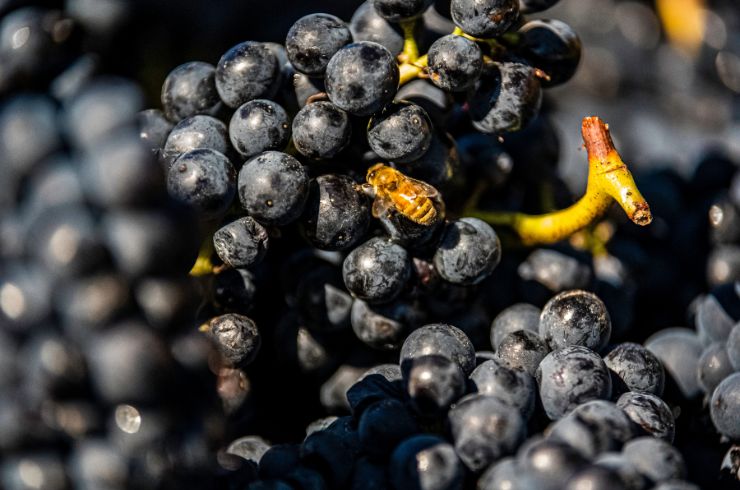
Bees need no introduction for their contribution to the natural world. In a vineyard’s case, it’s less about grapes or pollinating vines and more about their contribution to cover crops. That mix of legumes, grasses and flowering plants between vine rows depends heavily on pollinators to reseed, and bees facilitate nitrogen-fixing cycles by supporting species like clover and vetch, which in turn improves soil structure and nutrient availability. Given healthy cover crops moderate vine vigour, boost water infiltration and feed soils through root extracts, it’s unthinkable to not have bees around in vineyards, and producers should be encouraging them even more.

Beyond these, there’s a whole supporting cast of critters doing good out among the vines. Ground-dwelling folk like beetles and spiders form a crucial second tier of pest control within the vine rows, while in the air, songbirds like wrens, swallows and bluebirds can play a critical role in controlling flying insects, especially the ones who love irrigation infrastructure. Growers – who recognise that bird diversity correlates strongly with reduced pest outbreaks – encourage such wildlife with hedgerows, nesting boxes and designated watering spots. As long as they don’t eat the berries, of course. Large mammals, when managed thoughtfully, can also contribute positively to a vineyard. Sheep are now hugely common in vineyards, and with good reason – they reduce under-vine vegetation naturally, compact pruning debris and can return nutrients to the soil via manure.
Cynics might argue that stories on socials about these critters smacks of marketing hyperbole, but I’m on the optimistic side of this discussion. Aren’t they part of a measurable, agronomically significant process that ultimately shapes the final quality of the fruit? Phenolic development, disease pressure and harvest timing are all influenced by how well vineyards’ ecological systems function. Owls, bats, bees, birds, insects, grazing animals and more aren’t some cute accessories to terroir – they’re its fully fledged engineers.

The producers below are fully on board with welcoming wildlife into the vineyards, many through the practice of biodynamics, but not exclusively so. Whatever their motivation, it can surely only be a good thing for our natural world to integrate and encourage wildlife into the vineyard ecosystem.
12 wines from producers who utilise wildlife in their vineyards to try
2021 Château Pontet-Canet, France
13% alc. RRP 240, drink by 2041
This pillar of biodynamic practices on the left bank has crafted something both vibrant and savoury in this vintage. Flush with high-toned aromatics of honeysuckle and even a soapy touch of lavender, the palate is all broody and smooth with smoke, coffee and leather. Smart stuff.
2022 Gut Oggau, Atanasius, Austria
12.5% alc. RRP 82, drink by 2035
A riveting blend of Austria’s brightest red grapes, blaufränkisch and zweigelt with the slightest hint of effervescence. The nose is confident and dramatic as swirls of beetroot and smoke collide, while the palate is bold and beautifully balanced, ending with fresh crunch for extra tension.
2021 Reyneke Biodynamic Chenin Blanc, South Africa
13% alc. RRP 55, drink by 2031
Also a fan of farm animals to boost soil
health, Reyneke uses natural predators, including ducks, to manage its local snail population. This chenin is, first and foremost, beautifully fragrant with orange blossom and chamomile all singing in the glass. The palate has a creamy bedrock on which lemon, lime and a hint of smoke all dance.
2019 Birgit Braunstein Leithaberg Chardonnay, Austria
13.5% alc. RRP 65, drink by 2031
Cows, goats, bees, chickens, owls, there’s even a rumour that storks are part of the ecosystem at this revered 400-year-old Austrian estate. The wines are thoroughly modern though, and this cool chardonnay customer balances out the mellow lemon balm and lush melon flavours with a crème fraîche-esque tang acting as backbone.
2022 COS Cerasuolo di Vittoria, Italy
13% alc. RRP 60, drink by 2027
This biodynamic estate is renowned for championing local varieties. Made in the southern Sicilian region of Vittoria, this blend of nero d’Avola and frappato has a vibrant pink colour and balances the gentle spice of the former grape with the light-touch red fruits of the latter.
2023 La Crema Pinot Noir, USA
13.5% alc. RRP 85, drink by 2035
La Crema is part of the sustainable stable, Jackson Family Estates. Brimming with cherry, raspberry and pomegranate, the fine tannins of this Sonoma Coast pinot support the red fruits and exotic notes of allspice from the sensitive oak exposure, well.
2025 Iona Elgin Highlands Sauvignon Blanc, South Africa
13% alc. RRP 46, drink by 2028
Planted with hedgerows to support insects and pollinators, Iona sits high above the Atlantic on the Elgin coast. Its cool sea breezes make it one of the coolest vineyard spots in the country. This sauvignon has a blistering purity, with plenty of lime sourness balanced out with roasted grapefruit lushness and a long finish.
2023 Louis Latour Ardèche Chardonnay, France
13.5% alc. RRP 40, drink by 2027
While a Rhône chardonnay might seem very ‘now’ as people seek out affordable alternatives to white Burgundy, Louis Latour was already on the case in the 1970s with this from the IGP Coteaux de l’Ardèche. Unoaked, fresh with apples, pears and a distinct juicy peachiness to add weight to the crunchier fruit.
2021 Domaine La Soumade Rasteau, France
15% alc. RRP 41, drink by 2036
Dry reds from this largely unknown southern Rhône appellation were promoted to cru status in 2010. Skilled winemaking combined with swanky consulting has resulted in this very smart grenache-dominant red which is aged in both concrete and oak before light filtering. Hedonistic aromas with a richly fruity palate and a healthy dose of spice lead to a long finish.
2023 Emiliana Natura Carménère, Chile
13.5% alc. RRP 20, drink by 2027
Alpacas are probably the standout wildlife feature of this producer – one of the pioneers of biodynamics in Chile – although there are plenty more to be found on the estate. This flagship grape definitely benefits from a more holistic approach, being a gentler and more sophisticated version with its sour cherries, plum and spice.
2025 Yealands Pinot Gris, New Zealand
13% alc. RRP 22, drink by 2028
This estate – which famously uses babydoll sheep to graze grass in its vineyards – makes aromatic varieties with juicy crunch. A satisfying mouthful of pear, quince, ginger and a splurge of melon, it’s a very refreshing pinot gris and great value.
2024 Domaine Bousquet Premium Organic Malbec, Argentina
13% alc. RRP 23, drink by 2030
This Mendoza producer uses all manner of farm animals – chickens, ducks, cows and more – to add compost, help soil structure, and encourage biodiversity among its vines. This unoaked malbec is bright with blackberry and cassis fruit and, despite no oak, still retains a peppery spice.
This article first appeared in issue #82 of Halliday magazine. To receive the magazine, unlock digital access to 190,000 tasting notes, and more, become a member now.
Latest Articles
-
Wine Lists
Happy International Durif Day: here are three wines to celebrate with
4 Jun 2026 -
Wine Lists
Exciting new chenin blanc to try
1 Jun 2026 -
News
Treasury Wine Estates to cut global portfolio, focus on 'Power Brands'
3 Jun 2026 -
News
Brokenwood’s Graveyard Vineyard Shiraz continues its remarkable legacy with the 2024 vintage release
3 Jun 2026


More on sustainability
-
From the tasting team
High flying, low impact: Marcus Ellis on the producers using drones to manage their vineyards
14 Apr 2026 -
From the tasting team
Sustainable and beyond: Marcus Ellis on sustainability in the wine industry
8 Mar 2026 -
From the tasting team
The Tasting Team talk sustainability in the wine industry
9 Mar 2026